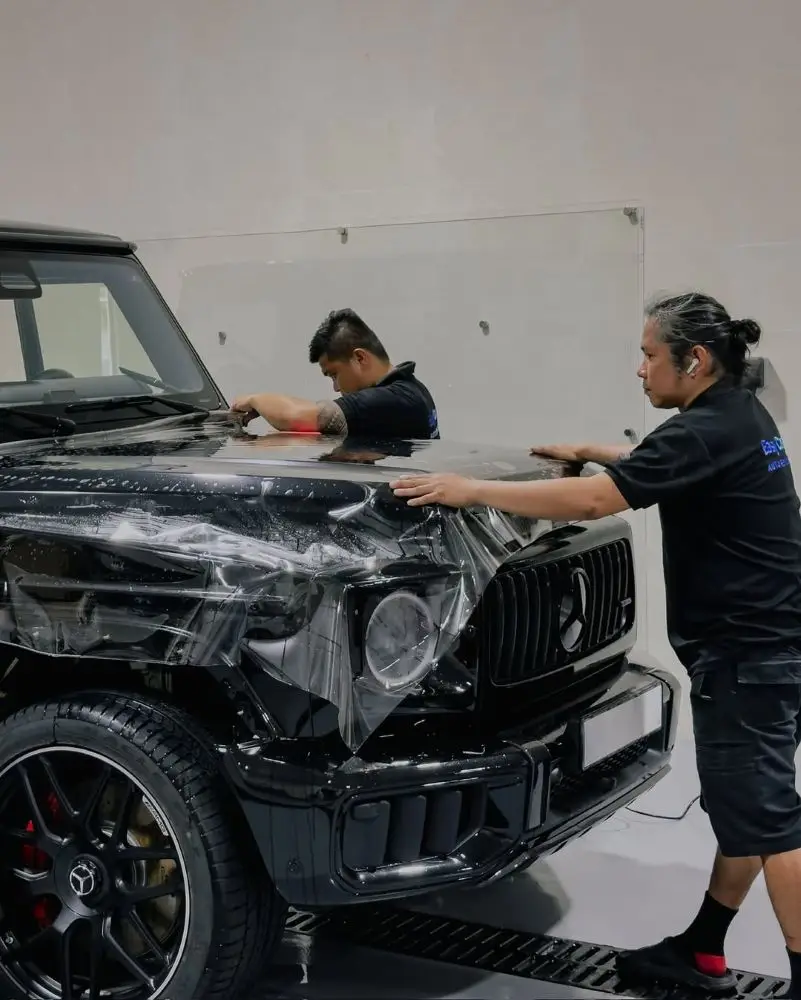
Car owners today have to make smart decisions about vehicle paint protection. The UAE's harsh weather makes it necessary to use strong automotive paint protection. Every day, UV radiation and sand harm cars. PPF and ceramic coating are the two most popular options for vehicle paint protection. Both paint protection options protect and offer unique benefits for your vehicle.
Modern paint protection film and ceramic coating technologies advance rapidly. The paint protection film vs ceramic coating level debate grows stronger each year. This guide goes into great detail about both protection choices. It covers the similarities, variations in cost, and durability.
What is Paint Protection Film (PPF)?
PPF is a transparent thermoplastic polyurethane film applied directly to a car paint surface. PPF is the best way to keep chips from rocks and scratches from damaging your car. It requires professional installation to ensure the material sticks and covers well. Only use professional PPF Dubai services to ensure you get the best results. With their services, you can get the absolute best protection for your car than ever before. Below are some pros and cons of PPF paint protection:
PPF Pros
PPF is great for protecting your original paint from scratches. The film can properly repair minor scratches swirl marks. Its self-healing properties fix small damage from heat on their own. Impact resistance protects against chips from rocks and debris. Impact-resistant UV protection stops paint from fading under bright sunshine. PPF keeps your car's resale value high for a long time. Quality paint protection film PPF installation gives you the best UV protection.
PPF Cons
PPF costs more than other paint protection alternatives. For expert installation, you need trained workers and the right paint prep. Limited enhancement indicates that there won't be any increases in the shine. Installation complexity takes longer than other options. Also, some parts, like the bumper fenders, need extra care. Regular maintenance still applies despite superior protection levels.
What is Ceramic Coating?
Ceramic coating employs a liquid polymer that bonds permanently. This coating creates hydrophobic properties on paint surfaces. Ceramic coatings do a great job of keeping water and dirt out. The shiny polish makes your car look a lot better. A professional application ensures that the coverage is even and the curing is done right. This coating lasts longer than regular wax treatments. Below are its pros and cons:
Ceramic Coating Pros
This coating has your car looking brand new for a long time with long-lasting gloss. UV protection keeps paint safe from damage caused by the sun. The water repellency makes cleaning much easier than before. Hydrophobic properties prevent water spots from forming naturally. It's a lot easier to clean now that it doesn't get wet. The gloss makes your car look better. This coating protects against bird droppings and stains.
Ceramic Coating Cons
There is no protection against rock chips large scratches. Ceramic coating needs professional application for the best results. Premium ceramic coatings are also more expensive than other options. Surface preparation requires thorough cleaning before application. Curing time extends several days after initial installation.
PPF vs Ceramic Coating: Key Differences and Similarities
Knowing the distinctions between ceramic coating vs PPF helps you make smart choices. Below are the similarities and differences of these products:
Level of Protection
Paint protection film PPF protects your car more than other films when it comes to impacts. PPF provides top protection for rock chips and scratches. Heat automatically heals small scratches and swirl marks watermarks. Ceramic coats keep chemicals and other dangers from staining the surface. Quality ceramic coating compositions do not let UV rays through very well. It's easy to wipe away bird poop and chemical stains. PPF and ceramic protection levels are great for different types of cars.
Durability
PPF lasts a lot longer than other types of protective paint. Good protective films last readily for five to 10 years. Using the right paint preparation methods during installation makes it last longer. Meanwhile, ceramic coatings usually last no more than two to five years. Different environmental hazards affect PPF and ceramic coating durability. Both protection products work best with constant maintenance.
Gloss and Aesthetic Appeal
A ceramic coat gives a rich, shiny polish that makes vehicles look better. The velvety shine surpasses the original paint job quality significantly. There are different finishes for PPF, like matte and glossy finishes. Paint protection films maintain your vehicle's existing aesthetic perfectly. The ceramic coating formula quality affects the rate of gloss factor. The two products do a great job of making your automobile look better.
Maintenance Needs
Ceramic coatings repel water buildup and decrease washing needs. Its hydrophobic properties make cleaning easier and faster. When ceramic surfaces are placed correctly, watermarks don't happen often. For PPF, to keep it from peeling, you need to take good care of the edges. Check the edges of PPF often and get professional help when needed. Constant maintenance schedules make sure that both alternatives work at their best.
Cost Comparison
The cost of PPF and the ceramic alternative varies depending on how much coverage you want. Full car ceramic coating costs less than full PPF. Ceramic coat and PPF pricing depend on quality. Affordable price substandard PPFs offer a poor long-term value proposition. In some situations, premium ceramic formulae get close to PPF prices. The cost of installing a ceramic coat is greatly affected by how hard it is to install. PPF costs more up front but offers better long-term protection.
PPF vs Ceramic Coating: Which Should You Choose?
The best paint protection solution depends on what you require. Here are factors to help you choose between the:
Based on Driving Conditions
The ceramic coat is enough protection for daily city driving. PPF is needed for rock chip protection when driving on the highway. Frequent parking under trees needs a ceramic coat with chemical protection. PPF needs to be able to withstand impacts from debris when going off-road. Elements like sand and gravel favor protection film selection. Ceramic coatings work well in cities where there aren't many road dangers.
Based on Budget
At first, ceramic coatings are a cheap way to protect paint. PPF paint protection costs a lot more up front than other protective paint. Calculating long-term value shows that PPF is better for people who drive a lot. A ceramic coat is a great deal for cars that are not in constant use. It's a popular choice among budget-conscious shoppers because it is cheap. Premium protection demands PPF investment for serious car owners.
Combining PPF and Ceramic Coating
The best way to protect your paint is by combining PPF and ceramic coating. PPF paint protection film on the front bumper provides an optimal strategy. The ceramic option protects all of the other surfaces as well. This mix gives you the optimal protection you can find on the market. Film protection works well on front-facing panels to keep them safe from rock chips. Side mirrors and bumper fenders benefit from PPF application. Full vehicle ceramic coating completes the ultimate protection system perfectly.
Frequently Asked Questions (FAQs)
Which lasts longer: PPF or Ceramic Coating?
PPF is more durable, lasting between 5 and 10 years. Most of the time, ceramic coating lasts between two and five years.
Is PPF more expensive than Ceramic Coating?
Yes, PPF costs more at first, but it protects against impacts better.
Can I apply both PPF and Ceramic Coating together?
Yes, combining both offers maximum protection. It also increases the vehicle's shine.
Which is easier to maintain, PPF or Ceramic Coating?
Ceramic coating doesn't need as much work to keep it looking good. PPF needs more maintenance, but it protects better.
What is the best option for car owners in Dubai?
A mixed approach is best for optimum protection in hot climates. Otherwise, ceramic is great for city drivers, while PPF serves frequent highway drivers.