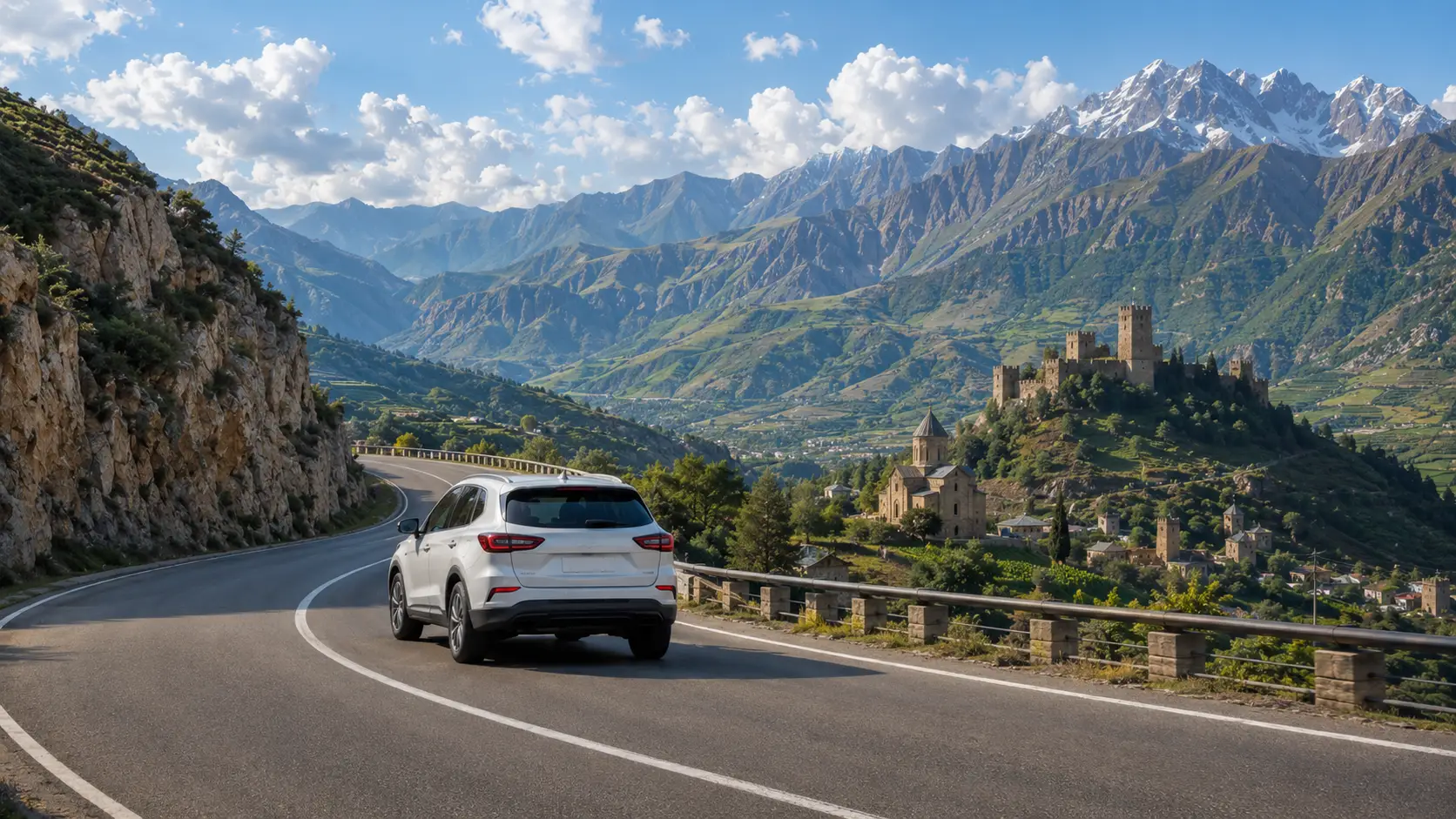
Thinking About Renting a Car in Georgia?
Getting a rental car makes a lot of sense if you're planning to leave Tbilisi, set your own schedule, drive up to the mountain passes, check out the wineries, or just go wherever the road takes you. On the flip side, you probably won't need one if you're sticking to the capital, feel uneasy about local traffic habits, or would rather just hop in a taxi, train, or marshrutka.
Renting a car in Georgia: the basics
Best for i
Road trips outside Tbilisi
Default car i
Economy or compact
Consider 4x4 i
Remote mountain roads
Check first i
Insurance rules and deposits
The short version: get a car if you're heading to places like Kakheti, Kazbegi, Borjomi, Vardzia, Kutaisi, Batumi, or Svaneti, where relying on buses to see monasteries and national parks gets tricky. If you're just spending a few days in Tbilisi, skip the rental—unless you have a ton of luggage or a specific day trip in mind.
| Decision point | Practical answer |
|---|---|
| Best for | People who want total freedom, families hauling bags, photographers looking for the perfect shot, and anyone heading off the main transit lines. |
| Not ideal for | City-only stays, anyone anxious about chaotic driving, wine tours (unless someone stays sober!), and tricky winter mountain roads if you aren't used to them. |
| Recommended car | A basic economy or compact car will easily handle the main highways for most first-timers. You really only need an SUV or a proper 4x4 if the specific roads, the weather, and your rental contract actually call for it. |
| Biggest risks | Hidden insurance traps, off-limits mountain roads, hefty deposits, surprise fines, poor photo evidence at pickup, booking the wrong type of car, and underestimating driving times. |
| Check before booking | Make sure you understand the insurance coverage, deposit requirements, fuel rules, restricted roads, the pickup/drop-off process, how they handle tickets, and who to call if you break down. See the later sections on insurance, payment and deposits, and roads and winter conditions. |
So, is it actually worth renting a car here?
Absolutely, especially if your trip is all about freedom, setting your own schedule, fitting in a lot of bags, taking scenic detours, and hitting spots that are a nightmare to reach by bus. Having your own wheels lets you customize the journey, but it also means you're the one dealing with local traffic, parking hassles, deposits, fine print on insurance, road limits, and any potential damage.
The best decision is not simply “car or no car.” It is “which parts of the trip need a car?” A lot of people actually just explore Tbilisi on foot or by taxi for the first few days, and only pick up a rental when it's time to hit the open road.
When grabbing a rental makes the most sense
Having your own car is a lifesaver when you plan to leave the main cities behind and dictate your own schedule. It's perfect for cross-country road trips, spontaneous sightseeing, families with a lot of gear, folks looking for specific photo spots, and anyone who refuses to wait around for a late bus.
You'll be glad you have a car for places like Kakheti, Kazbegi, Borjomi, Vardzia, Kutaisi, Batumi, and Svaneti, plus the various monasteries, canyons, and parks scattered in between. We're just throwing out examples here to help you decide; we dive into actual route planning further down the page in the road trip routes section.
- Choose a rental car if you love making random stops, leaving early in the morning, taking the scenic route, and being your own boss.
- Consider a rental car if your hotel is out in the suburbs, you've got kids in tow, or you're dragging heavy suitcases around.
- Be cautious if you're aiming for isolated mountain passes, heavy winter snow, or roads that literally require special written permission from the rental agency.
When you should probably skip the rental
You can skip the driving if you're mostly hanging out in Tbilisi, doing short city hops, visiting museums, dining out, and walking everywhere. For that kind of trip, grabbing a Bolt, taking the metro, catching a train, or booking a day tour is way less stressful than worrying about parking tickets, traffic, and inspecting a car for scratches.
When not to rent: Definitely don't bother if chaotic driving stresses you out, you want to drink wine all day, you're only staying in the city, you land exhausted late at night, or you think you can brave icy mountain passes with zero winter driving experience.
If the contract looks shady, don't just jump at the cheapest price you see. Deposit rules, insurance exclusions, tires, road restrictions, and support process are covered in later sections.
Comparing rentals against taxis, Bolt, marshrutkas, trains, and drivers
To figure out what works best, you have to weigh flexibility and comfort against how complicated your route is and how much responsibility you want. Having your own car gives you ultimate freedom, but it leaves you entirely on the hook for the driving, parking, and whatever's hidden in the rental contract.
| Transport type | Best suited for | Main perks | Downsides | Flexibility level |
|---|---|---|---|---|
| Rental car | Self-guided road trips, pulling over whenever you want, families with tons of gear, and scenic detours. | Total control over your schedule, where you stop, last-minute detours, and trunk space. | You're the one dealing with the stress of driving, finding parking, massive deposits, potential speeding tickets, and proving you didn't scratch the bumper. | Very high |
| Taxi or ride-hailing app | Zipping around the city, quick hops, nights out drinking, and easy A-to-B trips. | You don't have to park, sign any contracts, or take photos of dents. | Pretty useless for full-day rural exploring or massive cross-country trips. | Medium in cities, lower in remote areas |
| Marshrutka | Budget intercity travel and common routes between towns. | Usually simple for popular routes and avoids driving responsibility. | Cramped seating, rigid schedules, nowhere to put big bags, and no pulling over for photos. | Low to medium |
| Train | Selected city-to-city routes, relaxed travel days, avoiding road fatigue. | No road stress and often more comfortable than minibuses for longer segments. | Trains don't go everywhere, and their schedules rarely line up with trips into the mountains or countryside. | Low |
| Private driver | Wine regions, mountain day trips, nervous drivers, winter routes, complex local logistics. | Local road knowledge, no need to drive, easier for wine tasting and difficult days. | Less independence than self-driving and may need advance planning for full-day routes. | Medium to high |
| Organized tours | Great for newbies, hitting the major tourist traps, and folks who just want someone else to do the planning. | Simple planning, guide support, no driving or parking responsibility. | Fixed schedule, less privacy, fewer custom stops. | Low to medium |
Honestly, the best move for most people is a mix: rely on the metro and Bolt in Tbilisi, and only grab a rental when you actually need the freedom for the countryside.
How much it costs to rent a car in Georgia?
What you pay usually boils down to the type of car, the time of year, how long you need it, where you pick it up, and the fine print regarding insurance, deposits, and where you're allowed to drive. A super cheap daily rate looks great on a comparison site, but it rarely reflects what you'll actually spend. Before pulling the trigger on a car in Tbilisi, Batumi, or Kutaisi Airport, double-check exactly what's included, what they'll upcharge you for, and if they even allow you to drive to your destination.
What actually drives up the cost?
The final price usually depends on these factors:
Vehicle class
Basic economy cars are going to be your cheapest bet, while you'll pay a premium for SUVs, legit 4x4s, minivans, and luxury rides.
Season and demand
Prices spike during summer, holidays, and peak ski season, and bigger vehicles like SUVs and 4x4s will sell out fast.
Rental duration
Renting for a week or two brings the daily rate down, while a quick one- or two-day rental feels pricey once they tack on all the fixed fees.
Where you grab it and leave it
Expect extra fees if you want it dropped at your hotel, need an airport pickup, arrive late at night, or want to leave the car in a different city.
Insurance and deductible
Included coverage, optional protection, deductible terms, and excluded damage can change both the price and your financial risk.
Extras and route permissions
Child seats, winter equipment, cross-border permission, delivery, cleaning, route approval, and fine handling may add extra costs.
Use this section as a pricing framework, not as a live quote. Exact Georgia car rental prices should be checked close to publication and date-stamped if added to the article. Deposit mechanics are covered later in the payment and deposits section, while deductible and liability are explained in the insurance section.
Average prices by car type
Average prices by car type are best presented as levels unless current quotes have been checked. The table below shows how each vehicle category usually compares in cost and use case. It is not a live price list, and it should not be used as a substitute for checking current rental terms.
Georgia rental car price comparison by vehicle type
iCompare average monthly prices across vehicle categories using USD daily rates.
| Vehicle type | Who it's for | Common trips | Cost | Good to know |
|---|---|---|---|---|
| Economy cars | Anyone on a tight budget, highway driving between major cities, and easy flat routes. | Perfect for hopping between Tbilisi, Kutaisi, and Batumi, cruising the main roads of Kakheti, or quick day trips. | Lowest | Very cheap, but make sure your bags actually fit, the AC works, the tires aren't bald, and the car can handle your planned drive. |
| Compact sedans | Couples, smaller families, and people doing a lot of driving on decent pavement. | Cruising the highways in comfort, moving between cities, and carrying a normal amount of luggage. | Low to medium | Still pretty affordable and definitely more comfortable than a tiny hatchback, but they still struggle on bad roads. |
| SUVs | Mixed road conditions, more luggage, higher seating position. | Main roads plus some rougher access roads when permitted by the rental terms. | Moderate to expensive | Not every SUV is a true 4x4. The difference is explained later in the car type section. |
| True 4x4 vehicles | Remote mountain roads, difficult surfaces, winter-sensitive routes. | Routes that require stronger traction, clearance, and written rental permission. | High | Higher price does not automatically mean every road is allowed. Confirm road permissions in writing. |
| Minivans | Larger groups, big families, and anyone showing up with way too much luggage. | Moving a lot of people around on decent, paved roads. | Moderate to expensive | Pricier, and while the space is amazing, they are terrible for narrow mountain passes unless the rental company explicitly clears it. |
| Luxury cars | Corporate travelers, people wanting extra comfort, or someone celebrating a special event. | Rolling up to a nice hotel in the city, VIP airport pickups, and sticking strictly to perfect pavement. | Highest | The most expensive option, and they usually come with huge deposits, age restrictions, mileage caps, and strict insurance rules. Make absolutely sure you read the fine print before paying. |
How seasons impact the price and when you should book
Unsurprisingly, rental prices jump as soon as tourist season hits. If you're coming in the summer, over a holiday, or during ski season, good luck finding an automatic SUV or a minivan if you wait too long. Shoulder-season dates may give more choice, while low-season periods can be cheaper if weather and route plans are realistic.
How rental prices usually change by season in Georgia
Looking at the data, you'll find the cheapest rates in November (around $34 a day), while August peaks at closer to $67 a day. Take a look at the chart below to see the seasonal trends before locking in your flights.
Getting the best deal: If you specifically need an automatic, a legit 4x4, a minivan, or winter gear—or if you're traveling during the busy months—book early. Don't just hold out hoping the daily rate will magically drop.
When is the best time to lock in your rental?
The source timing data points to the lowest plotted daily rate of about $35.11/day around 52 days before your trip. For peak dates, automatics, SUVs, vans, and 4x4-style routes, earlier booking can also improve vehicle choice.
Extra fees and cheap rental risks
A cheap rental can be a good choice only when the contract is clear. Compare the total cost, not just the first daily rate you see. Some fees are optional, some depend on your pickup plan, and some appear only if something goes wrong.
Extra fees to check before booking
- Airport surcharge or airport pickup fee.
- Hotel, apartment, or address delivery fee.
- Young driver fee or stricter age-related conditions.
- Additional driver fee and required documents for each driver.
- One-way fee for returning the car in another city.
- Child seat fee and availability by age/size group.
- Winter equipment fee, including winter tires or chains where relevant.
- Cross-border permission fee and any required insurance extension.
- Late return fee or after-hours return charge.
- Fuel refill charge if the fuel policy is not followed.
- Cleaning fee for excessive dirt, sand, mud, or interior mess.
- Fine administration fee if traffic or parking fines arrive after the trip.
- Damage processing fee or inspection-related charge after return.
That dirt-cheap rental is only a bargain if the contract is transparent, the tires have tread, the insurance is solid, and they actually pick up the phone when you call. Never book a car just because the massive font on the website says it's cheap. Before handing over your card, figure out exactly what the insurance doesn't cover, how they hold the deposit, which roads will void your contract, what happens if you get a ticket, and who to call if you break down.
Deposit rules are intentionally not explained in detail here because they belong in the later payment, credit cards, debit cards, cash deposits, and no-deposit rental section. Insurance liability and deductible rules are covered in the later insurance, deductible, liability, and exclusions section.
Car rental requirements and documents in Georgia
When getting a rental car in Georgia, it helps to distinguish between the country's driving laws and the specific rules set by the rental agency. Even if you have the legal right to hit the road, the company renting you the car can still enforce their own policies regarding your age, how long you've been driving, payment options, deposits, extra drivers, insurance coverage, and where you're allowed to take the vehicle. Make sure to carefully read through the specific terms before you lock in a car rental in the country of Georgia.
Rental conditions at a glance
Driver requirements
AGE RULES VARY
YOUR DRIVING RECORD COULD COUNT
Every company has its own criteria when it comes to minimum age limits, required driving experience, fees for younger drivers, and who is allowed to rent certain types of vehicles. Be sure to double-check these policies for anyone who plans to drive before you actually book.
Documents and payment
CHECK EVERYTHING BEFORE ARRIVING
- Don't forget to pack your passport (or ID) along with your actual, physical driver's license.
- Find out ahead of time if you'll need to show an International Driving Permit.
- Verify exactly how they handle payments and deposits—whether they take credit cards, debit cards, cash, or require a pre-authorization.
- Make sure additional drivers bring their own required documents.
Insurance basics
READ COVERAGE TERMS
- Find out exactly what kind of insurance comes standard with the daily rate.
- Always look into how much the deductible or maximum liability will cost you out of pocket before you hand over any money.
- Make sure to ask about what isn't covered—like damage to the tires, windows, or undercarriage, as well as rules about off-roading or letting someone else drive.
- Keep insurance details in writing, not only in conversation.
Pickup, delivery and one-way return
VERIFY WHERE TO GO
- Make sure you know the exact pickup spot, any delivery charges, when the office is open, and what to do if your flight is delayed.
- See if getting the car at the airport or having it dropped off at your hotel will add to your final bill.
- Find out if you can drop the car off in a different city and how much extra that might cost.
- Try to do your initial car inspection while the sun is still up so you can spot any scratches.
Extras to confirm
PUT IT ON PAPER
- If you need a baby seat, snow chains, a GPS, or roof racks, you usually have to ask for them well in advance.
- Cross-border travel and difficult roads may require written permission.
- Fuel policy, mileage rules, cleaning expectations, and fine handling should be clear.
- Save messages, booking confirmation, and contract terms until the deposit is closed.
What paperwork you need to rent a car
The exact paperwork you'll need depends entirely on the rental agency, the type of car you want, how you plan to pay, and your personal driving background. Before you show up, review your booking confirmation and reach out to the agency to clarify exactly what documents every driver needs to have on hand. General travel guides are helpful, but you shouldn't rely on them over the specific fine print in your rental company's contract.
| Document | Usually required? | Why it matters | Practical note |
|---|---|---|---|
| Passport or ID | Usually yes | Used to confirm the renter’s identity and contract details. | Use the same name format as in the booking where possible. |
| Valid driving licence | Yes | The person getting behind the wheel has to show they are legally authorized to operate that specific type of vehicle. | Make sure you have the physical license with you; digital copies or photos won't cut it unless the company explicitly says otherwise. |
| International Driving Permit | Sometimes | This document translates your license and might be mandatory depending on what language or alphabet your home license uses, or just the agency's strict internal policies. | Remember that an IDP isn't a standalone license, so you still have to carry your original one with you. |
| Booking confirmation | Usually useful | This paper proves what car you booked, the pickup schedule, the price you agreed on, and provides emergency contact info. | It's a good idea to save a screenshot or print it out just in case you don't have internet access when you arrive. |
| Payment card or deposit method | Usually yes | Needed for payment, pre-authorization, security deposit, or cash deposit arrangement. | Confirm whether the company accepts credit card, debit card, cash deposit, or another method. |
| Additional driver documents | If another person will drive | Insurance may not apply if an unlisted driver causes damage. | Register every driver at pickup and make sure each person meets the same document rules. |
Your driver's license and the International Driving Permit
You absolutely must have a valid driver's license to get a rental car in Georgia. In reality, the biggest hurdle is just making sure the local cops and the rental desk staff can actually read and understand your license. If your home license isn't printed in a common language or uses a non-Latin alphabet (like Cyrillic or Arabic), the rental agency will probably ask for an International Driving Permit, and it's handy to have if you get pulled over.
Keep in mind that an International Driving Permit is just a translation, not a real license on its own. It should be carried with the original licence. If you only have an IDP and do not carry the original driving licence, the rental company may refuse the rental or treat the documents as incomplete.
Licence and IDP checklist
- Check that your driving licence is valid for the full rental period.
- Confirm whether your licence language or alphabet requires an IDP.
- Ask the supplier directly if the booking terms are unclear.
- Carry the original licence and IDP together if an IDP is needed.
- Make sure each additional driver meets the same licence requirements.
Minimum age, driving experience, and additional drivers
Age limits and driving experience requirements are enforced by the rental agencies themselves, not just dictated by national law. A few companies will rent to younger people if they agree to certain conditions, while others have strict age limits if you want to book an SUV, a real 4x4, a luxury vehicle, or drive on tricky winter roads. The same applies to minimum driving experience.
Anyone else who plans to take the wheel needs to be officially added to the rental contract before they start driving. If an unregistered driver gets into a fender bender, your insurance will likely be voided and you'll be left dealing with the financial fallout.
| Requirement | What to confirm | Why it matters |
|---|---|---|
| Minimum age | Supplier’s age rule for the chosen vehicle class. | Age limits can affect eligibility, price, deposit, and available car categories. |
| Young driver conditions | Any extra fee, restriction, or higher deposit for younger drivers. | The daily price may not show all age-related costs. |
| Driving experience | Minimum years of licence holding or experience required by the supplier. | Renting a larger vehicle or driving tough roads often requires more experience than just grabbing a basic economy car. |
| Vehicle class restrictions | You might face tougher eligibility rules if you want an SUV, a rugged 4x4, a minivan, or a luxury ride. | A driver may qualify for one vehicle class but not another. |
| Additional drivers | Required documents, fee, and contract listing for every driver. | Insurance and liability rules may change if an unlisted person drives. |
Payment & Deposits
Payment terms are one of the most important parts of car rental in Georgia. The advertised daily rate gives you a rough idea of the rental cost, but the agency's rules around deposits and payment methods will dictate how much actual cash or credit you need to have on hand when you arrive. It's always smart to reach out before booking to see if they take credit cards, debit cards, cash, bank transfers, or if they offer a zero-deposit option.
This section explains payment and deposit mechanics only. Insurance coverage, deductible, liability, and exclusions are covered later in the insurance section.
Credit/debit cards vs cash deposit
Using a credit card is usually the norm for covering the security deposit, particularly if you're dealing with big global brands or renting straight from the airport. You might find local shops that are okay with taking cash or a debit card, though doing so might mean you face higher rates, tougher contract rules, or fewer cars to choose from. To be completely safe, get their payment policy in writing before you show up.
| Payment method | Commonly accepted by | Pros | Risks | What to confirm |
|---|---|---|---|---|
| Credit card | Often required by international brands and some larger suppliers. | Useful for pre-authorization and standard rental security deposits. | The card must usually have enough available credit and match the renter’s name. | Card type, cardholder name, deposit amount, refund timing, and whether debit-style cards are accepted. |
| Debit card | May be accepted by some local companies and selected suppliers. | Helpful for travelers who do not use credit cards. | May be refused, may require a larger deposit, or may limit available vehicle classes. | Whether the debit card is accepted for both payment and deposit, not just rental payment. |
| Cash deposit | More likely with flexible local suppliers than with strict international brands. | This is a great workaround if you aren't able to put a hold on a card. | You absolutely need a paper trail showing the exact amount, the currency used, how refunds work, and what might be deducted. | Make sure you know the required currency, get a receipt, understand the refund timeline, and know how they handle deductions for damage or tickets. |
| No-deposit rental | May be offered by some companies or under specific coverage terms. | Reduces the amount of money blocked or held at pickup. | Can cost more, include stricter terms, or still leave liability for excluded damage. | Whether “no deposit” also changes deductible, insurance exclusions, road permissions, and damage handling. |
How rental deposits work
A deposit is essentially a chunk of money the agency holds onto to protect themselves while you're driving their vehicle. Depending on who you rent from, they might put a temporary hold on your credit card, charge you upfront and refund it later, or just take physical cash. This money acts as a safety net for the rental business in case you return the car late, bring it back empty on gas, get a speeding ticket, damage it, or leave it filthy.
Keep in mind that your security deposit isn't automatically the same thing as your insurance deductible (sometimes called a franchise). The deposit is the amount held or collected as security. If you get into a scrape, the deductible is the maximum out-of-pocket amount you're responsible for paying according to your insurance policy. Sometimes these two figures match up perfectly, but other times they differ or involve complicated contract clauses.
Plain-English example: a rental agency might freeze a certain amount on your credit card as a security measure. If you return the car on time, with the correct fuel level and no new issues, the block should be released according to the supplier and bank process. If there is a fine, fuel charge, or damage claim, the supplier may deduct or hold part of the amount while the issue is processed.
| Deposit type | How it works | What can delay release | What to keep |
|---|---|---|---|
| Card pre-authorization | Funds are blocked but not necessarily charged. | Things like slow bank processing, unexpected tickets, damage assessments, or a lost return receipt can all slow this down. | Hold onto your contract, the photos you took before driving off, the drop-off confirmation, and your final bill. |
| Charged card deposit | They actually withdraw the funds from your account and wire them back later assuming you didn't damage anything. | Delays can happen due to slow refund processing, currency exchange issues, bank hold-ups, or disputed charges. | Payment receipt, refund terms, and written return confirmation. |
| Cash deposit | You hand over physical bills, which the agency keeps in a safe and gives back to you once you return the car in good shape. | Dropping the car off late at night, arguing over scratches, dealing with fines, or losing your receipt can complicate getting your cash back. | Always get a physical receipt that lists the date, the currency, the exact amount handed over, and the rules for getting it back. |
Deposit questions to ask before booking
- Is the deposit blocked, charged, or paid in cash?
- What payment methods are accepted for the deposit?
- Does the card need to be in the main driver’s name?
- When is the deposit released after return?
- Can traffic or parking fines be charged after the trip?
- What deductions can be made for fuel, cleaning, late return, or missing equipment?
- How are damage claims documented and communicated?
- Will I receive written return confirmation?
Is it possible to grab a rental in Georgia if you don't have a credit card?
Yes, you can pull this off, mostly by looking for local shops that are willing to take cash, accept debit cards, or waive the deposit entirely. That being said, it's definitely not a sure thing everywhere you go. Many international brands and stricter suppliers may still require a credit card in the main driver’s name.
If you need car rental Georgia without credit card, ask the supplier three separate questions: whether they accept your payment method, whether they accept that method for the deposit, and whether the same method is allowed for your chosen vehicle class. If you're aiming for a high-end luxury ride, a rugged 4x4, an SUV, a one-way trip, or a winter-ready vehicle, expect the company to be a lot less flexible.
Just because a place doesn't ask for a deposit doesn't mean you're off the hook financially. Even if a rental is advertised with no deposit, the contract may still exclude tires, glass, underbody, prohibited roads, unlisted drivers, wrong fuel, or accidents without required documentation. Check the insurance section before relying on the phrase “full coverage.”
Local vs international car rental companies in Georgia
Picking the right car rental agency in Georgia involves a lot more than simply hunting down the cheapest rate per day. You can have a great experience with local shops, big global brands, or online aggregators, but they usually have totally different policies when it comes to how you pay, insurance details, canceling, customer service, and where you're allowed to drive.
The best choice really boils down to finding a company that aligns with where you want to go, what paperwork you have, how you want to pay, and how much risk you're comfortable taking on. This becomes incredibly crucial if you're trying to rent without a credit card, want the car brought to your hotel, need a one-way trip, are heading into the mountains, or require formal permission to tackle specific dirt roads.
Local companies, international brands, and aggregators compared
Local rental companies may be more flexible with delivery, payment methods, and route advice. The big global brands tend to have highly standardized paperwork and well-oiled processes right at the airport. Booking sites are awesome for quickly comparing rates, but keep in mind that the final rules are dictated by the actual company handing you the keys.
| Booking option | Best for | Advantages | Disadvantages | What to double-check |
|---|---|---|---|---|
| Local car rental companies | People who prioritize flexibility, want insider advice on routes, need the car dropped off at their hotel, prefer to use cash or debit, and value hands-on support. | They are typically much more laid-back about where you pick up the car, how you pay the deposit, staying in touch, and answering hyper-specific route questions. | The rules can be all over the map, and the actual contract might feel a bit more informal compared to the big international chains. | Pay close attention to how they word their insurance, what deposit methods they take, which roads are off-limits, their operating hours, the state of the car, and getting things in writing. |
| International rental brands | People who like knowing exactly what to expect from the paperwork, want to pick up right at the terminal, collect loyalty points, and stick to a familiar routine. | You generally get a much more predictable experience, crystal-clear corporate policies, and a seamless pickup right when you step off the plane. | They tend to be highly rigid about requiring credit cards, high deposits, age limits, adding extra drivers, and who gets to drive premium cars. | Make sure to check their exact credit card rules, insurance deductibles, what coverage is thrown in, their actual office hours, hidden airport fees, and the process for dropping off late at night. |
| Aggregators and comparison sites | Anyone who wants to rapidly compare a bunch of different deals or see what types of cars are actually available across the board. | They are incredibly helpful for glancing at base prices, seeing different car categories, checking cancellation policies, and knowing who actually has cars in stock. | Be careful, because the insurance you buy from a booking site is usually completely separate from the actual rental company, meaning you might easily miss the supplier's specific fine print. | Always find out the name of the actual rental company, read their specific deposit rules, look for mileage limits, check where the insurance comes from, and understand the cancellation policy. |
What is the cheapest rental company in Georgia?
The supplier chart compares USD daily prices for Dollar, Naniko, GTG Car Rental, and CarWiz. The accompanying source text lists recent cheapest finds at Dollar ($18.93/day), Naniko ($26.05/day), and GTG Car Rental ($31.11/day), while the chart itself uses its own USD values.
In this chart, the plotted bars come from the USD daily rates in the source data. Before you book with any supplier, read the insurance, deposit, mileage, pickup, cancellation, road-permission, and support terms together.
Which rental setup fits different travelers best?
The right rental setup changes with the trip. A first-time visitor will usually care most about clear support and an easy handover; someone driving mountain routes should look harder at the vehicle, written road permission, tires, and insurance exclusions.
| Traveler profile | Rental setup to consider | Why it suits the trip | Details to verify |
|---|---|---|---|
| First-timers | A supplier with plain English terms, quick replies, and an uncomplicated pickup. | Makes pickup less confusing and gives you somewhere practical to turn during the trip. | Coverage wording, emergency number, pickup inspection steps, and return conditions. |
| Budget-focused travelers | Compare local firms, aggregators, and basic car classes line by line. | A cheap daily price can still turn into a more expensive rental overall. | Deposit, mileage, fuel policy, excluded damage, added fees, and cancellation rules. |
| Families | A supplier that confirms child seats, luggage space, pickup timing, and support before arrival. | For family trips, space, equipment, and a reliable handover can matter more than the cheapest compact car. | Child-seat supply, boot space, air conditioning, insurance, and additional-driver rules. |
| Mountain-route drivers | A supplier that confirms the exact vehicle fit and route permission in writing. | An SUV badge does not guarantee real 4x4 capability, and insurance may not cover every mountain road. | Drivetrain, clearance, tire type, prohibited roads, towing rules, and written approval. |
| Business travelers | An international brand or structured supplier with predictable pickup and invoicing. | Standardized documents and clear office procedures may be more useful than maximum flexibility. | Invoice details, card rules, pickup location, premium-car deposit, and return timing. |
| No-credit-card travelers | A flexible local supplier that clearly accepts debit card, cash deposit, or no-deposit rental. | A credit card in the main driver’s name is still required by many stricter suppliers. | Confirm the method for both the rental charge and the deposit. |
| Winter travelers | A supplier that confirms winter tires, chains if relevant, route advice, and emergency support. | On winter mountain roads, the right equipment matters more than a low advertised rate. | Winter tires or chains, 4x4 need, exclusions, weather-sensitive routes, and support steps. |
| Longer rentals | A supplier with clear monthly pricing, maintenance rules, replacement policy, and deposit handling. | Over a longer rental, small contract details have more time to become real costs. | Mileage, maintenance, insurance renewal, deposit duration, replacement car policy, and fine handling. |
Car rental insurance guide
Read the insurance terms before you settle on the car, not after you are standing at pickup. Do not stop at the word “insured”: look at what is covered, what is excluded, the deductible, the documents required after an accident, and which roads and drivers the contract actually allows.
This section explains insurance and financial responsibility in plain English. Deposit mechanics are covered separately in the payment and deposits section; road suitability and route difficulty are covered later in the roads and winter conditions section.
Common insurance types
Suppliers may use different insurance names, but the same broad ideas usually appear: third-party liability, damage waiver, theft protection, optional extra cover, and sometimes personal accident cover. The label alone is not enough. Look at what is covered, what is left out, and what you must do if something happens.
| Insurance type | Typical cover | Common exclusions | What to verify before booking |
|---|---|---|---|
| Third-party liability | Damage or injury you cause to another person, vehicle, or property, up to the policy limits. | Damage to your rental car, excluded conduct, or claims missing the required documents. | Policy limits, police-report rules, and whether it comes with the rental by default. |
| CDW / damage waiver | Damage to the rental car, usually with a deductible and specific conditions. | Tires, wheels, glass, underbody, roof, interior, off-road use, and roads the contract bans. | Deductible, excluded parts, permitted roads, and required documents after damage. |
| Theft protection | Theft of the vehicle, usually only when security and reporting rules are followed. | Lost keys, negligence, no police report, an unlocked car, or belongings left inside. | How to report theft, key rules, deductible, and personal-item exclusions. |
| Full coverage | May reduce or remove some renter liability for covered damage. | Often still excludes certain parts, behavior, roads, drivers, or documentation failures. | Whether it is supplier coverage or third-party reimbursement, and what exclusions remain. |
| Super CDW / full coverage plus | May offer broader protection than basic CDW, depending on the supplier. | It may still leave out reckless or drunk driving, banned roads, wrong fuel, and drivers not listed on the contract. | Exact exclusions, remaining liability, towing, downtime, tires, glass, and underbody cover. |
| Personal accident insurance | May cover driver or passenger injury benefits under specific policy terms. | Medical costs outside the policy scope or events already covered by travel insurance. | Whether you already have travel insurance and whether this coverage is useful for your trip. |
Car rental insurance coverage comparison
| Coverage item | Third-party liability | CDW / damage waiver | Full coverage / Super CDW |
|---|---|---|---|
| Damage to another vehicle or property | Usually included | Check terms | Check terms |
| Rental-car body damage | Usually not included | Usually covered with deductible and conditions | May reduce liability; exclusions can still apply |
| Theft of the rental vehicle | Usually not included | Only if theft protection is included | Check security rules, keys, and police-report requirements |
| Glass, lights, mirrors, and roof | Usually outside basic cover | Often excluded or tightly limited | Confirm in writing if these parts are included |
| Tires, wheels, and underside | Usually outside basic cover | Commonly excluded | Read this closely if your route includes mountain roads |
| Prohibited roads or off-road driving | Usually excluded, or at least disputed, when the agreement bans that road. Request written route permission before driving difficult roads. | ||
| Unlisted drivers | Coverage may fail when the person driving is not named in the rental agreement. Add every driver before pickup. | ||
| Police report and claim documents | Many claims require correct documentation. Ask the supplier what to do before moving the car or leaving the scene. | ||
Deductible, franchise, deposit, and liability
The deductible or franchise is the amount the renter may still have to pay after insured damage. Liability is the renter’s broader financial responsibility under the contract. The deposit is separate: it is a security hold or payment, as described in the payment and deposits section.
Plain-English example: the supplier might block a deposit for security, while the same contract also sets a deductible for covered damage. For covered damage, your out-of-pocket cost may run up to that deductible. For excluded damage, the bill can be higher than expected even when the deposit was smaller.
Deductible and liability questions to ask
- What deductible or franchise applies to this exact vehicle?
- Does the optional coverage lower the deductible, or does it work as reimbursement later?
- Which parts remain excluded even after extra coverage is added?
- Are tires, wheels, glass, roof, and underbody actually covered?
- How is damage handled if it happens on a restricted road?
- Which documents must be provided for a claim to be accepted?
- Does the deposit match the deductible, or are they separate amounts?
Common insurance exclusions
The most expensive insurance misunderstandings usually come from exclusions. A traveler may think “full coverage” means every type of damage is covered, but many contracts still exclude certain parts, behaviors, roads, or documentation failures.
High-risk exclusions to look for: tires, wheels, glass, mirrors, roof, underbody, interior damage, clutch damage, lost keys, wrong fuel, reckless driving, drunk driving, unlisted drivers, off-road driving, prohibited mountain roads, border crossing without permission, and accidents without required police documentation.
| Exclusion area | Why it can cost you | Question to ask before booking |
|---|---|---|
| Tires, wheels, glass, and underbody | Rough roads often damage these parts, and basic cover may leave them out. | Are they included, excluded, or covered only through a specific protection package? |
| Unlisted driver | Coverage can fail if the person driving is not listed in the contract. | What is the process and cost for adding another driver? |
| Prohibited roads and off-road use | The car may be able to reach a road that the insurance will not cover. | Which routes are off-limits, and can you approve my itinerary in writing? |
| Border crossing without permission | Cross-border trips may need paperwork, approval, and an insurance extension. | Which countries are allowed, what documents are needed, and what happens if permission is missing? |
| Missing police or supplier documentation | A claim can be rejected if the renter leaves the scene or misses the required paperwork. | Who should I call first after an accident, and when do I need a police report? |
Insurance and mountain roads
Mountain roads are one of the main reasons to read the rental contract carefully in Georgia. A vehicle may be strong enough to drive a road, but the rental agreement may still restrict that road. Even a true 4x4 does not make every mountain route automatically allowed or insured.
For remote mountains, rough unpaved roads, snow, mud, river crossings, or seasonal routes, get the supplier’s route approval in writing. Do not rely only on a verbal answer at pickup.
Mountain-road rule: choose the vehicle based on the road, season, tires, clearance, and written rental permission — not only on the SUV label. Detailed road categories and route risk levels are covered later in the roads, mountain driving, restricted routes, and winter conditions section.
What type of car fits a Georgia road trip?
The right car in Georgia depends on the route, season, luggage, driver confidence, and what the rental agreement permits. For cities and main roads, many travelers can stay with a smaller vehicle; mountain routes, rough access roads, snow, mud, and remote areas can change that quickly.
Do not choose by category name alone. Some vehicles sold as SUVs are really crossovers with limited clearance or no true four-wheel-drive system. For difficult roads, focus on tires, clearance, drivetrain, vehicle condition, and whether the contract permits the route.
Economy car, sedan, SUV, or true 4x4?
Economy cars are often fine for city driving, paved main roads, and easy lowland trips. Compact sedans usually add comfort for longer paved drives. Crossover SUVs help with luggage and mixed surfaces, but that does not make them ready for remote mountain roads. A true 4x4 mainly pays off when the plan includes rougher roads, winter-sensitive routes, or places where clearance and traction matter.
Which car type fits your Georgia route?
Match the vehicle to road surface, season, luggage, and rental permissions — not just the SUV label. This visual is a planning guide, not popularity or live booking data.
| Car type | Best for | Limitations | Before booking |
|---|---|---|---|
| Economy car | City driving, paved roads, short lowland trips, and budget-minded routes. | Less room for bags, lower clearance, and a harsher ride on rougher surfaces. | Look at tire condition, AC, luggage fit, and whether the route suits the car. |
| Compact sedan | Main highways, longer paved drives, couples, and small families. | Poor fit for rough mountain roads, deep potholes, snow, or awkward access tracks. | Check clearance, tires, spare wheel, and road restrictions. |
| Crossover SUV | Mixed conditions, extra luggage, higher seating, and easier gravel-access roads. | It may not have true 4x4 capability and can still be barred from difficult mountain roads. | Ask about all-wheel drive, tire type, and written route permission. |
| True 4x4 | Remote mountain roads, rougher surfaces, winter-sensitive trips, and demanding itineraries. | More expensive, often thirstier on fuel, and still not automatically covered everywhere. | Confirm drivetrain, clearance, tire type, excluded roads, towing rules, and route approval in writing. |
| Minivan | Groups, families, airport transfers, and paved-road itineraries with plenty of luggage. | Awkward on narrow, steep, rough, or seasonal roads. | Check luggage space, passenger comfort, road suitability, and whether hiring a driver makes more sense. |
SUV vs 4x4: what is actually different?
An SUV and a 4x4 are not the same thing. “SUV” usually describes the body style: a higher seat, more space, and a tougher-looking shape. “4x4” is about drivetrain: power can go to all four wheels, which helps with traction on rough, muddy, snowy, or steep roads.
| Point to compare | Crossover SUV | True 4x4 |
|---|---|---|
| Main advantage | Comfort, space, higher seating position, easier travel on mixed but moderate roads. | Better traction and capability on difficult surfaces when used correctly. |
| Drivetrain | May be front-wheel drive, all-wheel drive, or simply marketed as an SUV without much off-road ability. | Built around stronger four-wheel-drive capability, depending on the exact model and condition. |
| Ground clearance | Usually higher than a sedan, though still not always enough for difficult tracks. | Often better, but the exact model, tires, load, and road surface still matter. |
| Tires | May come with standard road tires unless winter or all-terrain tires are specifically confirmed. | Still risky if the tires are worn, unsuitable, or wrong for the season. |
| Rental permission | May be restricted on rough or remote roads. | Can still be banned from specific roads, even if it can physically get there. |
Do not rent from the label alone: ask for the exact model, drivetrain, tire type, clearance, spare tire, and written confirmation that your route is allowed. Paying more per day does not automatically buy broader insurance cover.
Vehicle details to check beyond the rental label
A category label tells you less than the actual setup of the car, so check the usable details before booking. That matters most on Georgia trips with mountain roads, winter dates, heavy luggage, or long gaps between towns.
| Spec | Why it matters | What to ask |
|---|---|---|
| Transmission | A manual may cost less or be easier to find, but steep or winding roads get tiring if you are not relaxed with manual driving. | Is the exact vehicle automatic or manual? |
| Tire wear | Worn or unsuitable tires reduce braking, traction, and confidence on wet or mountain roads. | Are the tires in good shape and right for the season? |
| Winter tire fit | Snowy or icy routes become risky fast without suitable tires. | Are winter tires included for the dates and region I plan to drive? |
| Spare wheel and tools | On remote roads, a missing spare, jack, or basic tool kit can turn a small problem into a long wait. | Is there a spare wheel, jack, and basic tool kit? |
| Ground clearance | Low-clearance cars are easier to scrape on stones, ruts, potholes, and rough access roads. | Is the ground clearance suitable for my route? |
| Air conditioning | In summer or on longer drives, weak air conditioning quickly makes the cabin uncomfortable. | Does the air conditioning work properly? |
| Luggage space | Two people may manage in a small car until large bags or child equipment take up the cabin. | Will our luggage fit without blocking the view out the back? |
| Child-seat fit | Families should confirm both seat availability and vehicle space. | Will the requested child seat fit securely in this vehicle? |
| Roof rack | Helpful for gear-heavy trips, though it can affect height clearance and fuel use. | Can a roof rack be supplied, is it permitted, and is it written into the agreement? |
| Vehicle condition | An older car is not automatically a problem; maintenance matters more on long or remote drives. | When was the car last serviced, and what should I inspect at pickup? |
Choosing the car by road category
The easiest way to choose a rental car in Georgia is to sort your itinerary by road category. That keeps you from paying for more vehicle than you need while reducing the risk of taking a low-clearance car onto roads where traction, clearance, or written approval matter.
| Road category | Example areas | Normal car | SUV | 4x4 | Seasonal note | Permission note |
|---|---|---|---|---|---|---|
| City and lowland routes | Tbilisi, Kutaisi, Batumi, and main Kakheti roads. | Usually suitable. | Useful for comfort and luggage, not always necessary. | Usually unnecessary. | In these areas, summer heat and parking often matter more than drivetrain. | Standard terms may be enough, but read the route restrictions anyway. |
| Main mountain highway routes | Kazbegi, Gudauri, and the Georgian Military Highway. | May be possible in good conditions, depending on weather and supplier terms. | Often more comfortable. | Worth considering in winter or rough weather. | Cold-season weather can change fast on the pass and in nearby valleys. | Confirm the route is permitted and whether winter equipment is required. |
| Mixed mountain and side roads | Mestia, Juta side roads, and Truso side roads. | Not ideal for rougher sections. | May be suitable for some parts if permitted. | Often the safer choice on rough or seasonal stretches. | Rain, snow, roadworks, or landslides can change the plan. | Get written approval before taking any doubtful road. |
| Difficult or seasonal mountain routes | Ushguli, Tusheti, Omalo, Shatili, and Goderdzi Pass. | Usually not appropriate. | May still be insufficient if it is not a true 4x4. | Often required, but still not a guarantee that the route is allowed. | Treat these routes as seasonal plans and recheck conditions close to travel. | Drive them only with explicit written supplier approval and fresh road-condition checks. |
Road Conditions
Driving in Georgia can be a great part of the trip, but the roads vary a lot. Major routes between cities are often manageable, while rural stretches, mountain roads, side valleys, and winter routes need a more careful plan. The point is not to avoid driving; it is to line up the route with the right vehicle, timing, experience, and supplier permission.
Here, the focus is road safety and infrastructure. Detailed sightseeing routes are covered later in the best road trip routes section.
Main highways, rural roads, and map apps
Main roads linking Tbilisi, Kutaisi, Batumi, Borjomi, and Kakheti are the easiest starting point for many visitors. Even there, build in more time than the map suggests. Traffic, roadworks, trucks, villages, weather, livestock, pedestrians, and mountain sections can all slow the trip.
On rural routes, smooth pavement can give way to potholes, gravel, narrow lanes, or rough access tracks. Map apps help, but they can suggest shortcuts that do not suit a rental car, especially in the mountains or after bad weather.
Map shortcut warning: treat a faster-looking shortcut as a suggestion, not route approval. If a road looks rough, narrow, unpaved, flooded, snowy, or remote, stop and confirm that it suits the car and is allowed by the rental agreement.
Mountain road risk levels by route
It helps to sort mountain routes by risk level rather than treat them all the same. Some are routine tourist drives in settled weather; others are remote, seasonal, rough, or better left to experienced local drivers.
| Route / area | Road character | Season and weather sensitivity | Planning vehicle | Driving experience | Safer alternative |
|---|---|---|---|---|---|
| Kazbegi / Georgian Military Highway / Gudauri | Main mountain highway, with sections that become trickier in bad weather. | Higher in winter, fog, snow, or poor weather. | A normal car can work in good conditions; an SUV or 4x4 is a safer planning choice in winter-sensitive periods. | Moderate in settled weather; higher in winter. | Private transfer or driver during bad weather. |
| Mestia | Long mountain approach with changing surfaces and weather sensitivity. | Higher in winter, heavy rain, roadworks, or landslide-prone periods. | An SUV or 4x4 may be the better choice, depending on conditions and supplier terms. | Moderate to high, depending on conditions. | Use a driver, transfer, or local transport when conditions are poor. |
| Ushguli | Demanding mountain road beyond Mestia. | Very weather- and season-sensitive; road condition matters day to day. | Plan around a true 4x4 as the safer assumption, while still getting permission. | High. | Local 4x4 driver from Mestia. |
| Tusheti / Omalo | Remote seasonal mountain access road. | Very high; access can depend on season and weather. | True 4x4 and experienced driving are the minimum planning assumption. | Very high. | Local driver or specialized transfer. |
| Shatili | Remote mountain route with difficult sections. | High; conditions can change quickly. | True 4x4 is usually the safer planning assumption. | High. | Local driver or guided transfer. |
| Juta / Truso Valley side roads | Side roads that can be rough, narrow, or weather-sensitive. | Medium to high depending on weather and exact road. | An SUV or 4x4 may be necessary for some sections. | Moderate to high, depending on conditions. | Park earlier and continue on foot or with local transport if road conditions are poor. |
| Goderdzi Pass | Mountain pass with seasonal and surface-condition concerns. | High in poor weather and outside easy summer conditions. | 4x4 may be appropriate depending on current conditions. | High. | Alternative paved route or private driver. |
Routes where rental insurance may not apply
Insurance restrictions can matter more than vehicle capability. A car may be able to reach a road even though the rental contract prohibits that route. Damage on a restricted road can lead to a dispute or loss of cover.
| Route or area | Risk level | Recommended vehicle | Rental permission needed | Better alternative |
|---|---|---|---|---|
| Remote mountain routes | High | Usually SUV or true 4x4 depending on road. | Yes, get written confirmation. | Private driver, local 4x4 transfer, or easier route. |
| Seasonal passes | High to very high | True 4x4 may be needed, but permission is still separate. | Yes, especially outside stable summer conditions. | Use an alternative road or delay travel. |
| Rough unpaved side roads | Medium to high | Depends on surface, weather, and vehicle condition. | Ask before driving. | Park before the rough section and continue by foot or local transport. |
| Snow, mud, river, or washed-out sections | Very high | Do not assume any rental is covered. | Written approval and current condition check are essential. | Turn back, wait, or use a local driver. |
| Border or restricted-territory roads | Very high | Vehicle choice is secondary to legal and contract restrictions. | Required if cross-border travel is even allowed. | Covered later in the border-crossing section. |
Get route permission in writing: a verbal “yes” is not enough for difficult routes. Save the supplier’s written confirmation, including the route name, vehicle, dates, and any conditions.
Winter driving in Georgia by rental car
Winter car rental in Georgia can work in cities and lowland areas, but mountain routes are a different category. Snow, ice, fog, closures, police controls, and fast-changing weather can turn an ordinary road trip into a difficult drive. A 4x4 may help the car move, but it will not shorten braking distance on ice or replace winter tires and cautious driving.
| Winter factor | Why it matters | Practical move |
|---|---|---|
| Winter tire condition | Good winter tires improve braking, control, and traction in cold or snowy conditions. | Confirm the tire type before pickup and look at the tread yourself. |
| Snow chains | They may be needed or required on some mountain sections during winter conditions. | Ask whether chains are available, included, and suitable for the vehicle. |
| 4x4 traction | It helps the car get moving, but it does not make braking or cornering safe on ice. | Drive slowly, keep inputs smooth, and do not overtrust the vehicle. |
| Mountain weather | Weather can change quickly between valleys, passes, and resort areas. | Check current road and weather information close to departure. |
| Driver experience | Winter mountain roads demand more than ordinary city driving. | Use a private driver if snow, ice, or steep roads are outside your comfort zone. |
Winter safety rule: do not head into mountain weather just because the car is a 4x4. When visibility, ice, snow, or road closures make the route uncertain, wait, choose another route, or use a private transfer.
Driving rules and fines
A smoother rental trip in Georgia comes from treating rules, fuel policy, parking, police checks, and rental-car fines as connected parts of the same process. Drive defensively, follow posted signs, keep the rental documents close, and avoid choices that can create charges after you return the car.
Because traffic rules, fine amounts, child-seat requirements, and enforcement details can change, avoid publishing exact legal claims without checking them first. This guide gives practical guidance; exact numbers belong only after verification.
Driving rules to know before you rent
Tourists should pay closest attention to the rules that shape everyday driving: keep right, follow posted speed signs, wear seat belts, use proper child restraints, avoid alcohol before driving, avoid handheld phone use, and drive defensively around villages, pedestrians, livestock, minibuses, and overtaking traffic.
Key driving rules to verify before you drive
Tourist safety reminders
DRIVE ON THE RIGHT
Keep right and overtake with caution.
WATCH SPEED SIGNS
Follow posted limits, not map estimates.
SEAT BELTS AND CHILD SEATS
Wear seat belts and use the right child restraint.
DO NOT DRIVE AFTER DRINKING
Do not drive after drinking alcohol.
Local driving can feel assertive, especially around overtaking, merging, and mountain roads. Leave extra space, slow down in villages, and resist copying risky moves from local traffic. If a route starts to feel too demanding, stop and switch to an easier road or a private driver.
Seat belts and child passenger rules should be checked against current Georgian law before publication. From a practical rental perspective, families should request the correct child seat in advance and confirm that the seat fits the vehicle.
Child seats and passenger safety
REQUEST A CHILD SEAT
Book the correct size before pickup.
USE REAR SEATS IF REQUIRED
Check the current rule before the trip.
DO NOT LEAVE CHILDREN UNATTENDED
A parked car can become unsafe faster than it seems.
Legal-rule reminder: do not publish exact speed limits, child-seat age rules, alcohol limits, phone-use penalties, or fine amounts unless current official or legal sources have been checked.
Fuel policy and petrol stations in Georgia
Fuel policy is one of the easiest rental terms to misunderstand. Expect either a full-to-full rule or a same-level return rule, but use the contract as the final word. Take photos of the fuel gauge at pickup and return so you have evidence if a fuel charge appears later.
| Fuel topic | What it means | Practical advice |
|---|---|---|
| Full-to-full fuel | You pick up the car full and bring it back full. | Refuel near the return point and keep the receipt. |
| Same-level return | Bring the car back with the same fuel level shown at pickup. | Photograph the gauge before leaving the pickup point. |
| Fuel type | Using the wrong fuel can cause serious damage and may be excluded from insurance. | Ask the supplier to point out the correct fuel type and save it in your phone. |
| Card and cash payment | Payment options can vary between city stations and remote areas. | Keep a backup payment method for drives outside major cities. |
| Mountain fuel stops | Fuel stations are less frequent on remote or mountain roads. | Refuel before long rural drives, high passes, or evening departures. |
Fuel checklist before leaving pickup:
- Get the fuel policy in writing.
- Ask whether the car takes petrol or diesel.
- Photograph the fuel gauge and odometer.
- Check if there is a fuel card, required receipt, or preferred return station.
- Keep the final fuel receipt until the deposit is released.
Parking in Tbilisi, Batumi, Kutaisi, and at airports
Parking can be harder than the drive itself, especially in central areas. In Old Tbilisi, narrow streets, hills, one-way sections, and limited space make planning important. Batumi can get congested in summer, especially near the waterfront. Kutaisi is usually easier, though central streets and hotel areas can still need a plan.
| Location | Common parking issue | Practical approach |
|---|---|---|
| Tbilisi | Central streets, Old Tbilisi lanes, hills, one-way sections, and limited hotel parking. | Choose accommodation with parking, or pick up the rental only when you leave the city. |
| Batumi | Summer congestion, beach traffic, apartment blocks, and busy waterfront streets. | Confirm where you can park before arrival, especially in high season. |
| Kutaisi | Central parking, airport-transfer timing, and hotel access streets. | Confirm hotel parking and leave extra time before flights. |
| Airport parking | Short-stay parking, pickup timing, and space for the return inspection. | Follow the supplier’s return instructions and photograph the car before walking away. |
Paid parking zones, towing rules, and fine amounts should be verified before publication. For a traveler, the safest habit is simple: park only where permission is clear, avoid blocking entrances or narrow lanes, and keep proof of payment when required.
Police checks, traffic cameras, and fines on a rental car
With a rental car, fines can surface after you have left, because the notice goes to the company that owns the vehicle. If you receive a speeding, parking, camera, or other traffic fine during the rental, the supplier may take the amount from your deposit, bill you later, or add the administration fee allowed by the contract.
| Fine issue | Why it can affect you | What to ask the supplier |
|---|---|---|
| Traffic cameras | Camera fines may not be known immediately at return. | How long can fines appear after the rental? |
| Parking tickets | Bad parking can mean a fine, towing, or a slower deposit release. | How will parking tickets be recorded and shared with me? |
| Administration fee | The supplier may charge a processing fee in addition to the fine. | Is there an admin fee for fines or official requests? |
| Deposit deductions | Unresolved fines can reduce the amount returned to you. | Can fines be deducted from the deposit after return? |
| Later charges | A charge may be raised after you have already handed back the car. | How will you contact me, and what evidence will you send? |
What to do if you have an accident
If something happens to your rental car in Georgia, contact the supplier and follow their process before deciding what to do yourself. Your insurance position may depend on prompt reporting, official paperwork, photos, and whether you moved or repaired the car without approval.
This section covers the practical response workflow. Insurance exclusions are explained in the insurance section, and pickup/return evidence is covered later in the booking, inspection, and return section.
Accident procedure step by step
After an accident, stay calm and document the situation carefully. Do not leave the scene or agree to informal arrangements until you know what the rental company and insurance terms require.
Accident checklist:
- Pull over where it is safe and switch on the hazard lights.
- Check first whether anyone has been hurt.
- Call emergency services if anyone is injured, the damage is serious, the road is unsafe, or the law requires it.
- Contact the rental company on the emergency or support number listed in the contract.
- Do not leave the scene if official documentation is required.
- Take photos and videos before vehicles are moved, unless safety requires movement.
- Write down details from other drivers, witnesses, and the police, if they attend.
- Ask the rental company whether you need a police report or claim form.
- Do not sign anything you cannot understand until someone explains it clearly.
- Keep every message, call record, report number, photo, and video.
Police report, photos, and evidence
Many rental and insurance disputes are decided by the quality of the evidence. The insurer or rental company may ask you to prove what happened, where it happened, who was involved, and whether you followed the required steps.
| Evidence to save | Why it helps |
|---|---|
| All vehicles involved | Shows the full accident context and prevents selective damage claims. |
| License plates | Identifies vehicles and links photos to the incident. |
| Road position and layout | Shows lanes, direction of travel, distances, signs, and the accident location. |
| Close-ups of damage | Records scratches, dents, broken parts, tire damage, glass issues, and possible underbody concerns. |
| Signs and signals | Helps explain right of way, parking rules, speed limits, and road restrictions. |
| Weather and road surface | May matter on mountain roads, in winter, rain, mud, or low visibility. |
| Other driver documents | Helps the rental company and insurer identify the other party. |
| Police report number | May be required for insurance or supplier claim processing. |
| Rental-company communications | Shows that you reported the incident and followed instructions. |
Breakdowns, small damage, tires, glass, and underbody issues
Even a breakdown or minor-looking damage should be reported in the right way. A small scratch, cracked windshield, damaged tire, warning light, or underbody knock can become costly if you keep driving, arrange repairs yourself, or fail to document it.
| Problem | First action | Why it matters |
|---|---|---|
| Breakdown | Pull over safely and call rental support before arranging any repair. | Repairs or towing arranged without approval can lead to disputes. |
| Warning light | Take a dashboard photo and ask the supplier how to proceed. | Driving on can turn a small fault into a larger claim. |
| Flat tire or damaged wheel | Check that the car is safe, photograph the tire or wheel, and call the supplier. | Tires and wheels are common exclusions or dispute points. |
| Glass or mirror damage | Take photos and ask whether it is safe and allowed to continue. | Glass and mirrors may have separate coverage rules. |
| Underbody hit | Stop if safe, document location and visible damage, and contact support. | Underbody damage is often excluded and can affect safety. |
| Minor scratches | Photograph immediately and report according to the contract. | Even minor damage may be charged if there is no record of when it happened. |
Do not approve repairs on your own unless the rental company has agreed. Before moving or fixing the vehicle, ask who handles towing, whether a replacement car is available, who can approve repairs, and what evidence they need.
Border crossing with a rental car from Georgia
Taking a rental car from Georgia across a border is allowed only when the rental company permits it and prepares the documents beforehand. Do not assume a car hired in Georgia can automatically be driven into Armenia, Turkey, Azerbaijan, or elsewhere. Border rules, insurance validity, vehicle papers, and supplier policies can change, so confirm every cross-border plan before you book.
The safest approach is to ask the supplier directly which countries are permitted, which documents and fees apply, whether insurance stays valid, and whether the car has to be brought back to Georgia. Ask for the reply in writing and keep it with the rental paperwork.
Can you take a Georgia rental car to Armenia, Turkey, or Azerbaijan?
Driving a rental car from Georgia to Armenia or Turkey may be possible, but only if the supplier clearly allows it and prepares the necessary paperwork. Some companies ban cross-border travel entirely; others allow only selected countries with advance approval, extra insurance, vehicle authorization, and added fees.
Azerbaijan needs extra caution because border access, entry rules, and supplier policies can change. Do not plan a Georgia-to-Azerbaijan self-drive itinerary unless the current border situation, legal requirements, and supplier permission are checked close to travel.
| Destination | Is it usually possible? | What to confirm | Planning note |
|---|---|---|---|
| Armenia | Only with the rental supplier’s approval. | Written permission, vehicle paperwork, insurance validity, border fees, and return rules. | Confirm it before booking, not when you are already at pickup. |
| Turkey | Only with the rental supplier’s approval. | Cross-border authorization, insurance extension, required car documents, and permitted border points. | Check whether the vehicle must return to Georgia. |
| Azerbaijan | Highly dependent on current border rules and supplier policy. | Current border status, entry rules, vehicle permission, insurance, and legal requirements. | Verify close to travel and avoid assumptions. |
Never cross a border unless you have written permission. If cross-border travel is not allowed in the contract, insurance may not apply, the supplier may treat the trip as a breach, and the legal or financial consequences can be serious.
Documents, permissions, refusals, and restricted territories
Cross-border rental is shaped by both the supplier’s policy and the border rules. Even for a neighboring country, the car may need special authorization, original registration papers, an insurance extension, a power of attorney or permission letter, and approval for each named driver. Some suppliers may also restrict vehicle classes or refuse cross-border use for SUVs, premium cars, or routes they consider high risk.
| Requirement | Why it matters | What to ask before booking |
|---|---|---|
| Cross-border authorization | Shows that the rental company allows the car to leave Georgia. | Can you provide written permission for this exact country and border crossing? |
| Vehicle documents | Border officials may require original or supplier-issued vehicle paperwork. | Which documents will be provided with the car? |
| Insurance extension | Insurance that applies in Georgia may not apply abroad. | Is insurance valid in the destination country, and what is excluded? |
| Driver documents | Every driver may need to match the rental agreement and border requirements. | Are all additional drivers allowed to cross the border? |
| Extra charges | Cross-border permission, insurance, or paperwork can add costs. | Which fee applies, and do I pay it before pickup or at the border? |
| Return restrictions | Many suppliers require the car to return to Georgia. | Is one-way cross-border return allowed, or must I return the car in Georgia? |
| Reasons for refusal | The supplier may reject certain countries, roads, seasons, or vehicle types. | Are any countries, regions, or routes excluded from the rental agreement? |
Do not try to take a rental car to Abkhazia or South Ossetia. These areas should not be treated like ordinary road-trip stops. Rental companies generally prohibit such travel, insurance problems can be serious, and legal and safety risks are significant.
Pickup and drop-off locations in Georgia
The easiest pickup point in Georgia depends on how you arrive, where you sleep the first night, your confidence behind the wheel, flight timing, inspection conditions, and the direction of your route. City pickup in Tbilisi, Tbilisi Airport, Kutaisi Airport, Batumi, hotel delivery, and one-way arrangements can each be the right choice in a different situation. If you plan to start from the capital, compare car rental in Tbilisi before deciding between city pickup, airport pickup, or hotel delivery.
Where is the easiest place to pick up a rental car in Georgia?
Availability, opening hours, delivery fees, route direction, and inspection conditions matter more than simply counting office locations. This visual compares pickup convenience, not company locations.
The chart above is a planning visual, not live office-count data. If exact supplier availability is added later, it should be verified, date-stamped, and updated when offices or delivery rules change.
Tbilisi Airport or Tbilisi city pickup?
Tbilisi Airport pickup works well when you want to begin the road trip right away, arrive during office hours, and feel rested enough to drive after the flight. It can also solve late-night or early-morning logistics if the supplier explains the process in advance. The trade-off is possible airport fees, a less careful inspection in poor lighting, and the fatigue of driving after a long flight.
Tbilisi city pickup may be the better option if your first few days are in the capital and you do not need a car yet. It helps you avoid city parking, inspect the car in daylight, and reduce the chance of starting the trip tired.
| Pickup option | Best for | Advantages | Risks or downsides | Check before choosing |
|---|---|---|---|---|
| Tbilisi Airport pickup | Immediate road trips, short itineraries, travelers leaving the city right away. | Fast start, no need to return to the city for the car, useful for direct routes. | Possible airport fees, flight delays, tired driving, and inspection in the dark. | Confirm after-hours process, delay policy, inspection location, and fuel station options. |
| Tbilisi city pickup | Travelers spending time in Tbilisi before the road-trip part. | Daylight inspection, easier timing, no need to park in the city before leaving. | City traffic, delivery fees, or limited office hours depending on supplier. | Confirm the pickup address, delivery cost, inspection parking, and departure route. |
| Hotel or apartment delivery | Families, luggage-heavy trips, and travelers who value convenience. | Comfortable and flexible when the supplier offers clear terms. | Inspection space may be limited, and delivery can cost extra. | Ask where the inspection will happen and whether delivery changes return rules. |
Kutaisi Airport, Batumi, hotel delivery, and one-way returns
Kutaisi Airport can be a practical pickup point for budget-airline arrivals and western Georgia routes. Depending on your itinerary, it can work well for Kutaisi, canyons, Borjomi, Batumi, or Svaneti. Confirm your arrival time, the supplier’s office hours, and whether your needed vehicle class is actually available there.
Batumi pickup suits Black Sea coast trips, western Georgia routes, or travelers entering Georgia through Batumi. In summer, traffic and parking can be harder, so confirm the exact delivery and return location.
A one-way rental between Tbilisi, Kutaisi, and Batumi can save time when the route does not loop back. It can be useful on longer trips, but it may add a one-way fee and reduce the choice of vehicles.
| Pickup/drop-off option | Best for | Advantages | What to confirm |
|---|---|---|---|
| Kutaisi Airport | Budget-airline arrivals, western Georgia trips, and Kutaisi-based routes. | Can reduce backtracking if your trip starts in western Georgia. | Office hours, flight-delay policy, vehicle availability, fuel stations, and inspection lighting. |
| Batumi Airport or city | Black Sea coast trips, western Georgia itineraries, and summer beach stays. | Useful when your route begins or finishes near the coast. | Summer congestion, parking, exact delivery location, return process, and one-way fee. |
| Hotel or address delivery | Travelers with luggage, children, late starts, or no easy office access. | Convenient and flexible when clearly arranged. | Delivery fee, precise meeting point, inspection conditions, and fuel level on delivery. |
| One-way rental | Routes such as Tbilisi to Kutaisi, Tbilisi to Batumi, or western Georgia loops that do not return to the start. | Saves time and avoids backtracking just to return the car. | One-way fee, permitted cities, return address, after-hours return, and deposit closure. |
Best road trip routes in Georgia with a rental car
A rental car is especially useful in Georgia when the plan includes scenic stops, viewpoints, monasteries, wineries, canyons, national parks, or mountain areas that are awkward to combine by public transport. This section shares route ideas without repeating the detailed road-safety guidance from the roads and winter conditions section.
Use these routes as planning frameworks, not fixed instructions. Before you travel, check current road conditions, weather, vehicle suitability, insurance exclusions, and rental permissions, especially for mountain routes and remote areas.
Tbilisi to Kazbegi and the Georgian Military Highway
The Tbilisi to Kazbegi route is one of the most popular self-drive trips in Georgia. Typical stops include Ananuri, Gudauri, Stepantsminda, viewpoints along the Georgian Military Highway, and Gergeti Trinity Church. A car gives you flexibility to stop for photos, adjust timing, and avoid being tied to a fixed tour schedule.
In good conditions, this route can be manageable for many confident drivers, but mountain weather matters. Winter, snow, fog, roadworks, and traffic can change the difficulty quickly. Always confirm current conditions and rental permission.
Kakheti wine route
Kakheti is one of the easiest regions to justify renting a car in Georgia if you want flexible stops between towns, monasteries, viewpoints, and wineries. Common stops include Sighnaghi, Telavi, Kvareli, and wine estates across the region.
Wine-route rule: renting a car does not make sense for wine tasting unless someone stays completely sober. If everyone wants to taste wine, book a private driver or tour instead.
Central and western Georgia route
Central and western Georgia work well for a longer rental car itinerary because the route can combine mountain towns, caves, canyons, historic sites, and the Black Sea coast. A broad route may include Borjomi, Rabati, Vardzia, Kutaisi, Prometheus Cave, Martvili Canyon, Okatse Canyon, Batumi, the Black Sea coast, Svaneti, Mestia, and Ushguli.
| Route part | Why go by rental car | Car type note | Key caution |
|---|---|---|---|
| Borjomi, Rabati, Vardzia | Flexible stops between towns, historic sites, and natural areas. | Normal car or sedan may work for many paved-road plans. | Allow more time than map estimates and check roadworks. |
| Kutaisi, caves, and canyons | Good for combining several sites in one region. | Compact car or sedan may be enough for easier paved routes. | Check parking, opening hours, and access-road condition. |
| Batumi and Black Sea coast | Useful for coastal stops and western Georgia loops. | Vehicle choice depends more on luggage and comfort than off-road ability. | Summer congestion and parking can be more difficult. |
| Svaneti, Mestia, Ushguli | High flexibility for mountain scenery and remote villages. | SUV or true 4x4 may be appropriate depending on route and season. | Check road conditions, weather, insurance exclusions, and written route permission. |
3 to 10-Day Itineraries
The best Georgia road trip by rental car depends on how much time you have and how much difficult driving you want to include. Short trips should stay simple. Longer trips can add western Georgia or mountain regions, but only if the season, vehicle, and route permissions make sense.
| Trip length | Suggested route | Car type | Difficulty level | Key warning |
|---|---|---|---|---|
| 3 days | Tbilisi to Kakheti, or Tbilisi to Kazbegi in good conditions. | Economy, sedan, or SUV depending on route and season. | Easy to moderate. | Do not combine wine tasting with self-driving unless there is a sober driver. |
| 5 days | Tbilisi, Kakheti, Kazbegi, or a compact central Georgia route. | Sedan or SUV for comfort; 4x4 only if route and season require it. | Moderate. | Do not overload the itinerary with long drives every day. |
| 7 days | Tbilisi, Kazbegi, Borjomi, Vardzia, Kutaisi, or a western Georgia loop. | Sedan or SUV for paved routes; check vehicle needs for mountain sections. | Moderate to demanding. | Leave buffer time for roadworks, weather, and mountain delays. |
| 10 days | Tbilisi, Kakheti, Kazbegi, central Georgia, Kutaisi, Batumi, and selected mountain areas. | SUV or true 4x4 may be useful if Svaneti or rougher mountain roads are included. | Moderate to high. | Do not include remote or seasonal roads without current condition checks and written permission. |
How to book, inspect, return, and avoid disputes
The safest way to rent a car in Georgia is to treat the booking, pickup inspection, route confirmation, return process, and deposit closure as one workflow. Most disputes can be reduced by comparing the full terms before payment, documenting the car carefully at pickup, asking the right questions before driving away, and keeping proof until the rental is fully closed.
This section brings the operational steps together. Pricing, documents, payment, insurance, roads, fines, accidents, border crossing, and routes are covered in the earlier sections, so the focus here is the practical process from booking to return.
Booking step by step
Before booking, choose your route first and the vehicle second. A cheap city car can be fine for easy paved roads, but the wrong choice can become expensive if your itinerary includes mountain roads, winter conditions, luggage, child seats, one-way return, or route restrictions.
Booking checklist:
- Choose the route before choosing the vehicle class.
- Compare the total terms, not only the headline daily price.
- Check what insurance is included and what exclusions remain.
- Confirm the deposit amount, payment method, and refund process.
- Read mileage, fuel, pickup, delivery, and return conditions.
- Check road restrictions and get written route permission if needed.
- Confirm winter equipment, child seats, or other extras in advance.
- Save written confirmation of the booking, price, terms, and support contact.
Car rental booking process in Georgia
Choose route and car class
Start with your itinerary, season, road category, luggage, and driver comfort. Then choose the smallest suitable vehicle that is allowed for the route.
Compare total terms
Compare price, insurance, deductible, deposit, mileage, fuel policy, cancellation rules, delivery fees, one-way fees, and support process before paying.
Confirm documents and deposit
Check licence, IDP, passport, payment card, debit card, cash deposit, additional drivers, and any supplier-specific pickup requirements.
Inspect the car at pickup
Photograph the car, tires, wheels, glass, roof, fuel level, mileage, documents, and existing damage before you leave the pickup point.
Return and close deposit
Return on time, document the vehicle again, keep receipts, ask for written return confirmation, and save proof until the deposit is released.
Pickup inspection checklist
Pickup inspection is your baseline evidence. Do not rely only on the rental employee’s notes, and do not rush the process because you are tired or late. Take clear photos and videos before the car is moved from the pickup location.
Inspect before driving away:
- Front bumper, rear bumper, doors, fenders, and side panels.
- Roof, mirrors, windshield, windows, headlights, and taillights.
- Wheels, tires, tire sidewalls, spare tire, jack, and tools.
- Visible underbody areas where safe and practical.
- Interior seats, dashboard, trunk, mats, and child-seat condition if provided.
- Fuel level, mileage, warning lights, and dashboard indicators.
- Vehicle documents, insurance sheet, registration papers, and emergency contact.
- Scratches, dents, chips, stains, missing parts, or previous repair marks.
What to photograph and ask before driving away
Photos protect you, but questions protect you too. Before leaving the pickup point, ask the supplier to clarify anything that could affect your route, insurance, deposit, or return. If the answer matters, ask for written confirmation.
Questions to ask before driving away:
- Is my planned route allowed under this rental agreement?
- Are mountain roads, unpaved sections, or side valleys covered?
- What is the deductible or remaining renter liability?
- Are tires, glass, wheels, roof, and underbody covered or excluded?
- What number do I call after an accident, breakdown, or warning light?
- What happens if I receive a traffic or parking fine?
- Can I return the car after hours, and how is inspection handled?
- Is the deposit blocked, charged, or paid in cash?
- When and how will the deposit be released?
Return checklist, deposit release, and dispute prevention
The return process is the second half of your evidence trail. Try to return the car during office hours and in good light if possible. After-hours return can be convenient, but it can also create risk because you may not receive immediate inspection confirmation.
Return checklist:
- Refill fuel according to the agreed policy.
- Remove all personal belongings from the car.
- Clean excessive dirt, mud, sand, or interior mess if the contract requires it.
- Check for new damage before the supplier inspection.
- Take return photos and a walkaround video.
- Arrive on time and keep proof of return time.
- Keep fuel receipts, parking receipts, and relevant messages.
- Follow after-hours return instructions exactly if applicable.
- Compare return condition with pickup photos.
- Ask for written confirmation that the car was returned.
- Ask when the deposit will be released.
- Keep the final receipt and rental closure messages.
Common mistakes to avoid
Most car rental problems in Georgia come from a small group of preventable mistakes. Avoiding them is more useful than trying to memorize every possible contract detail.
| Mistake | Why it causes problems | Better approach |
|---|---|---|
| Choosing the wrong car for the route | A normal car may be fine on main roads but unsuitable for rough or seasonal routes. | Choose the car after checking road category, season, luggage, and permission. |
| Assuming every SUV is a 4x4 | Many SUVs are crossovers and may not have true 4x4 capability. | Ask for drivetrain, tires, clearance, and exact model. |
| Ignoring tires and clearance | Tires and underbody damage can be expensive and often excluded. | Inspect tires, wheels, spare tire, and clearance before leaving pickup. |
| Skipping insurance exclusions | “Full coverage” may still exclude important parts, roads, or behaviors. | Read exclusions and ask about tires, glass, underbody, roads, and police reports. |
| Driving prohibited roads | Insurance may not apply if the contract restricts the route. | Get written permission for mountain, remote, or doubtful roads. |
| Being surprised by deposit rules | Deposit method and refund timing can affect your travel budget. | Confirm card, debit, cash deposit, no-deposit, and refund rules before booking. |
| Skipping pickup and return evidence | Without photos, it is harder to dispute damage, fuel, or equipment claims. | Take photos and videos at both pickup and return. |
| Trusting map shortcuts blindly | Apps may suggest rough, restricted, or unsuitable roads. | Stay on suitable roads and check with the supplier when unsure. |
| Driving after wine tasting | It is unsafe and can create serious legal and insurance consequences. | Use a sober driver, private driver, or wine tour. |
| Planning unrealistic mountain days | Map time may not reflect weather, roadworks, photo stops, or fatigue. | Add buffer time and avoid stacking too many difficult roads in one day. |
FAQ: Everything You Need to Know About Renting a Car in Georgia
Thinking about hitting the road in Georgia? We’ve put together the essentials to help you plan. For all the nitty-gritty details on pricing, insurance fine print, and border crossings, be sure to check out our full guide.
Is it actually worth renting a car in Georgia?
Absolutely—if your trip involves exploring outside of Tbilisi. Having your own wheels gives you the ultimate freedom to stop at breathtaking viewpoints, visit remote monasteries, and explore wine regions or national parks at your own pace. It’s a lifesaver for families, photographers, or anyone on a tight schedule.
However, if you’re just spending a few days in Tbilisi, are a nervous driver, or plan on doing heavy wine tasting (please don't drink and drive!), you’re better off relying on taxis or hiring a local driver.
Let's be honest: is it safe to drive there?
Yes, but you need to be a confident and defensive driver. The main highways connecting major cities are generally a breeze. However, Georgian traffic can be... unpredictable. Be prepared for aggressive overtaking, wandering livestock, sudden roadworks, and Google Maps occasionally suggesting "shortcuts" that are actually dirt paths. Mountain and winter driving are a whole different beast and require extra caution and the right vehicle.
How much is this going to cost?
It really depends on what you need and when you're going. Economy cars are surprisingly budget-friendly, while true 4x4s, SUVs, and minivans will understandably cost a premium. Prices also jump during the peak summer season. To get an accurate idea, it's best to check current rates for your specific travel dates.
What paperwork do I actually need?
Keep it simple:
- Your passport (or ID)
- A valid driver’s license
- Your booking confirmation
- A credit card (or whatever payment method you agreed on)
- Note: If you have additional drivers, they need to show their documents and be added to the rental agreement too.
Do I need an International Driving Permit (IDP)?
Usually, no. But it depends on your license. If your home driver’s license is in the Latin alphabet (like English), you’re generally fine. If it’s in a non-Latin alphabet, or if you're renting from a particularly strict company, an IDP is a smart backup to have. It doesn't replace your actual license, though—you still need to bring both.
Can I rent a car without a credit card?
Sometimes! While big international rental brands will almost always demand a credit card in the main driver's name for the deposit, many local Georgian companies are much more flexible. They often accept debit cards, cash deposits, or sometimes even waive the deposit entirely. Just don't assume this is the case everywhere—check before you book.
Do I really need a 4x4?
Not necessarily. If you’re sticking to Tbilisi, main highways, and well-paved lowland routes, a standard economy car or compact SUV is totally fine. But if you’re planning to tackle steep mountain roads, remote villages, unpaved paths, or you're visiting in winter, a proper 4x4 is non-negotiable.
Can I drive to Kazbegi, Mestia, or Ushguli?
- Kazbegi: Very doable for most drivers, though it's heavily weather-dependent.
- Mestia: Requires more caution. It's a long, winding mountain road, and conditions can change quickly.
- Ushguli: This is hardcore territory. You need a true 4x4, serious driving experience, and written permission from your rental company to take their car up there.
Is winter driving safe?
In the cities and valleys, winter driving is pretty manageable. In the mountains? It’s serious business. Snow, ice, fog, and sudden road closures are common. You absolutely must have winter tires (and sometimes snow chains). A 4x4 will help you get moving in the snow, but remember: four-wheel drive doesn't mean four-wheel stop on sheer ice.
What does the rental insurance usually exclude?
A lot more than most people realize! Standard rental insurance almost always excludes damage to the tires, wheels, glass, roof, and undercarriage. It will also instantly become void if you drive drunk, let an unregistered person drive, take the car off-roading, or drive on prohibited routes. Crucial tip: If you get into an accident and don't get a police report, your insurance won't cover a dime.
How does the deposit work?
It’s basically a security hold. The company will either block a specific amount on your credit card or take it in cash. As long as you bring the car back on time, with the agreed amount of fuel, and without any new dents or missing equipment, you’ll get it back.
Can I take the car across the border to Armenia or Turkey?
Yes, but you can't just wing it. You need explicit, written permission from the rental company beforehand. They have to provide specific cross-border paperwork, extend your insurance, and there will definitely be an extra fee. Don't just show up at the border hoping for the best!
What should I do if I get into an accident?
- Pull over safely and check if anyone needs medical help (call emergency services if so).
- Call your rental company immediately.
- Do not move the car unless it's a massive safety hazard or the police tell you to.
- Take tons of photos and videos—the damage, the position of the cars on the road, license plates, road signs, and the weather.
What are the biggest mistakes tourists make?
- Renting a tiny city car for a rugged mountain trip.
- Thinking an all-wheel-drive crossover is the same as a rugged 4x4.
- Blindly following Google Maps onto terrible dirt roads.
- Not reading the insurance fine print (especially regarding tires and glass).
- Forgetting to take photos of the car's existing scratches at pick-up.
- Trying to squeeze too much mountain driving into a single day.
- Driving after hitting the local wineries.
When should I just skip the rental car?
Save your money and skip the rental if you’re just doing a city break in Tbilisi, if your main goal is exploring wine country (hire a driver so everyone can drink!), or if aggressive traffic makes you nervous. It’s also better to skip it if you’re traveling in the dead of winter and aren't comfortable driving on ice.